The stock market has always been a complex landscape where fortunes are made and lost in milliseconds. For decades, individual investors struggled to compete with Wall Street giants who possessed sophisticated algorithms, massive datasets, and teams of expert analysts. But the investment game is changing dramatically. Artificial intelligence has emerged as the great equalizer, and platforms like 5StarsStocks AI are placing institutional-grade analytics directly into the hands of everyday traders.
In 2025, the financial technology landscape has evolved beyond recognition. A staggering 90% of professional asset managers now use AI-powered tools in their investment processes, and the global AI finance market is projected to grow at 9.8% annually. What was once exclusive to hedge funds and investment banks is now accessible to anyone with an internet connection and the desire to invest smarter—not harder.
This comprehensive guide explores everything you need to know about 5StarsStocks AI, from its core technology and features to practical strategies for maximizing your investment returns. Whether you’re taking your first steps into stock trading or you’re a seasoned investor seeking an algorithmic edge, understanding how AI transforms investment decisions is no longer optional—it’s essential.
What Is 5StarsStocks AI? Understanding the Platform
5StarsStocks AI is an AI-driven investment platform that leverages artificial intelligence and machine learning algorithms to analyze market data and provide stock recommendations. At its core, the platform functions as your digital investment advisor, processing massive volumes of information that would take human analysts weeks to evaluate—all in milliseconds.
Think of it as having a tireless research assistant that monitors stock prices, financial news, company reports, earnings data, social media sentiment, and global market trends continuously. The platform then distills this overwhelming complexity into a simple, actionable rating system: stocks receive ratings from 1 to 5 stars based on their investment potential, growth prospects, financial health, and risk factors.
The Technology Behind the Magic
The platform operates on several sophisticated technological pillars:
Machine Learning Algorithms: These adaptive systems learn from historical market patterns and real-world outcomes. Unlike static analysis tools, the algorithms become smarter with every trade execution and market movement. When predictions prove accurate, the system reinforces those patterns. When forecasts miss the mark, the technology automatically adjusts to avoid similar errors in the future.
Natural Language Processing (NLP): The AI doesn’t just read numbers—it comprehends language. By analyzing news articles, earnings call transcripts, social media buzz, and analyst reports, the platform gauges market sentiment and identifies emerging trends before they become obvious to the broader market.
Predictive Analytics: Through advanced data modeling, the system forecasts potential stock price movements, sector rotations, and market volatility. These predictions aren’t crystal balls—no technology can guarantee future performance—but they provide statistical probabilities based on comprehensive data analysis.
Continuous Learning Systems: Often called “closed-loop learning,” this process means the AI constantly evolves. Each market session generates new data that feeds back into the model, refining future predictions and improving accuracy over time. It’s similar to how experienced investors develop better instincts, except this happens at computational speed.
Core Features: What Makes 5StarsStocks AI Stand Out
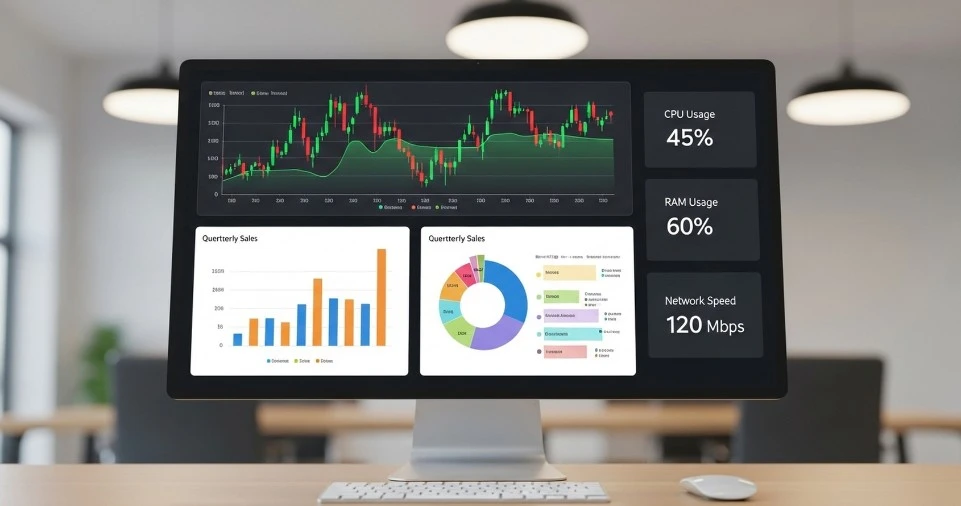
The platform distinguishes itself through a robust suite of features designed for both novice and sophisticated investors:
AI-Powered Stock Ratings
Every stock in the platform’s universe receives a star rating from 1 to 5, functioning like a quality indicator for investment potential. This system transforms complex financial analysis into an immediately understandable format. A 5-star rating signals strong growth potential with favorable risk-reward characteristics, while lower ratings suggest caution or limited upside.
The beauty of this system lies in its simplicity without sacrificing depth. Behind each rating sits comprehensive analysis of dozens of factors: earnings growth trajectories, revenue trends, debt levels, competitive positioning, management quality, sector momentum, and macroeconomic conditions.
Real-Time Market Insights and Data
In today’s hyper-connected markets, information ages within minutes. The platform provides:
- Live stock quotes updating in real-time
- Trading volume analysis to identify unusual activity
- Economic calendar integration tracking earnings releases, Federal Reserve meetings, and economic indicators
- Sector performance monitoring revealing which industries are gaining or losing momentum
- Breaking news alerts about companies in your watchlist or portfolio
This continuous stream of information keeps you informed about market-moving events as they unfold, enabling faster, more informed decision-making.
Automated Trading Capabilities
Perhaps the platform’s most powerful feature is its ability to execute trades automatically based on predetermined conditions. You can set specific parameters—such as buying when a stock reaches a certain price point, selling if losses exceed a defined threshold, or rebalancing your portfolio when sector allocations drift beyond target ranges.
This automation serves two crucial purposes: it removes emotional bias from trading decisions, and it ensures you never miss opportunities due to timing. The system can buy or sell positions while you’re sleeping, working, or spending time with family.
Risk Management Tools
Understanding and managing risk separates successful long-term investors from those who eventually exit the market. The platform provides:
- Comprehensive risk scoring for individual stocks and overall portfolio
- Value-at-Risk (VaR) calculations estimating potential losses under various market scenarios
- Maximum drawdown projections showing worst-case portfolio declines
- Sharpe ratio analysis measuring risk-adjusted returns
- Correlation matrices identifying portfolio concentration risks
These tools empower you to invest with eyes wide open, fully understanding the trade-offs between potential returns and acceptable risk levels.
Personalized Investment Strategies
Not all investors share the same objectives. A 30-year-old saving for retirement has different needs than a 60-year-old protecting wealth. 5StarsStocks AI recognizes these individual differences through customizable profiles:
Conservative Investors receive recommendations emphasizing capital preservation, dividend-paying stocks, and blue-chip companies with established track records. The algorithms prioritize stability over explosive growth.
Balanced Investors see suggestions mixing growth opportunities with defensive positions, creating portfolios designed to participate in market gains while maintaining reasonable downside protection.
Aggressive Traders access recommendations highlighting high-growth sectors like AI chips, biotechnology, and emerging technologies. These portfolios accept higher volatility in pursuit of superior returns.
The platform also accommodates different investment horizons—whether you’re day trading, swing trading, or building a multi-decade retirement portfolio.
User-Friendly Dashboard
Despite the sophisticated technology powering the platform, the interface remains remarkably intuitive. The dashboard presents:
- Portfolio performance tracking with visual charts showing gains, losses, and historical trends
- Customizable watchlists for stocks you’re researching
- Performance metrics including total returns, annualized performance, and benchmark comparisons
- Alert notifications for significant price movements or rating changes
- Educational resources explaining features and investment concepts
Even beginners can navigate the platform confidently without needing a finance degree or programming knowledge.
How 5StarsStocks AI Actually Works: The Investment Process

Understanding the workflow helps investors maximize the platform’s potential:
Step 1: Comprehensive Data Collection
The system begins by gathering information from thousands of sources simultaneously:
- Market data feeds providing real-time pricing and volume information
- Financial statements revealing revenue, earnings, cash flow, and balance sheet metrics
- News aggregators compiling relevant articles, press releases, and analyst reports
- Social media platforms capturing investor sentiment and trending discussions
- Economic databases tracking GDP growth, inflation rates, unemployment figures, and monetary policy
- Technical indicators calculating moving averages, relative strength, momentum oscillators, and chart patterns
This data collection happens continuously, ensuring the analysis always reflects current market conditions.
Step 2: Advanced AI Analysis
Once data is gathered, the machine learning algorithms process it through multiple analytical frameworks:
Fundamental Analysis: The AI evaluates financial health by examining profit margins, revenue growth rates, return on equity, debt-to-equity ratios, and competitive advantages. It compares companies against industry peers and historical performance benchmarks.
Technical Analysis: Algorithms identify chart patterns, support and resistance levels, trend directions, and momentum indicators. This reveals short-term trading opportunities and optimal entry/exit points.
Sentiment Analysis: Natural language processing examines the tone and content of news coverage, social media discussions, and analyst commentary. Positive sentiment can precede price rallies, while negative sentiment may signal forthcoming declines.
Quantitative Modeling: Statistical models estimate future price ranges based on historical volatility, option pricing, and correlation with market indices.
Risk Assessment: The system calculates beta (market sensitivity), standard deviation (volatility), maximum drawdown potential, and liquidity considerations.
Step 3: Rating Generation
After completing comprehensive analysis, the AI assigns each stock its star rating. This multi-factor scoring process weighs:
- Growth potential (30% weight): Expected earnings growth, revenue expansion, market share gains
- Financial health (25% weight): Balance sheet strength, cash generation, profitability trends
- Market conditions (20% weight): Sector momentum, economic backdrop, valuation multiples
- Risk factors (15% weight): Volatility levels, debt burdens, competitive threats
- Technical momentum (10% weight): Price trends, volume patterns, relative strength
The final rating provides a holistic assessment reflecting both opportunities and risks.
Step 4: Actionable Recommendations
Based on your personal risk profile and investment objectives, the platform generates specific recommendations:
- Buy signals for high-rated stocks aligned with your strategy
- Sell signals when ratings deteriorate or risk thresholds are breached
- Hold recommendations for positions that remain attractive but don’t warrant additional capital
- Rebalancing suggestions to maintain target allocations across sectors and asset types
Step 5: Automated Execution (Optional)
If you’ve enabled automated trading, the system can execute these recommendations instantly when trigger conditions are met. Alternatively, you can review suggestions manually and make decisions at your own pace.
Investment Sectors and Opportunities Covered
5StarsStocks AI provides comprehensive coverage across multiple sectors, ensuring diversified opportunities regardless of market conditions:
Technology Sector (40% of Platform Coverage)
Technology remains the largest focus area, tracking companies developing:
- Artificial intelligence and machine learning solutions transforming industries from healthcare to finance
- Cloud computing infrastructure powering the digital economy
- Cybersecurity platforms protecting against escalating threats
- Software-as-a-Service (SaaS) businesses with recurring revenue models
- Semiconductor manufacturers supplying chips for everything from smartphones to data centers
- E-commerce platforms reshaping retail
Recent platform success stories include identifying AI chip manufacturers before major rallies, with documented growth rates exceeding 20% within six-month periods.
Healthcare Sector (25% Coverage)
Healthcare investments offer both innovation and defensive characteristics:
- Pharmaceutical developers bringing breakthrough treatments to market
- Biotechnology firms advancing gene therapy, immunotherapy, and precision medicine
- Medical device manufacturers improving patient outcomes and surgical techniques
- Healthcare services companies operating hospitals, diagnostic centers, and telehealth platforms
- Health insurance providers benefiting from aging demographics
This sector typically maintains stability during economic downturns since healthcare demand persists regardless of business cycles.
Renewable Energy Sector (20% Coverage)
The global energy transition creates substantial investment opportunities:
- Solar energy producers and equipment manufacturers
- Wind power developers building utility-scale installations
- Electric vehicle (EV) manufacturers transforming transportation
- Battery technology companies enabling energy storage solutions
- Lithium mining operations supplying critical materials for EV batteries (projected +25% CAGR through 2030 according to IEA data)
- Nickel producers supporting sustainable energy infrastructure
Emerging Sectors (15% Coverage)
The platform also tracks innovative niches including:
- 3D printing stocks revolutionizing manufacturing and medical applications
- Cannabis industry expanding with legalization trends
- Defense and military technology including drones, satellites, and surveillance AI
- ESG (Environmental, Social, Governance) investments for sustainable portfolios
Real Performance: What The Numbers Show
While past performance never guarantees future results, examining historical data provides insight into the platform’s capabilities:
Documented Success Rates
According to aggregated performance data:
- 65% of AI-generated recommendations outperformed traditional investment management approaches
- 15% of traditional methods outperformed AI recommendations
- 12% showed similar performance between AI and conventional strategies
- 8% remained inconclusive due to insufficient data or unique market conditions
Real User Outcomes
The platform showcases several documented case studies:
Conservative Growth: Samantha, a marketing professional with limited investment experience, used automated decision-making to build a diversified portfolio. Over 18 months, she achieved consistent quarterly gains while maintaining controlled risk exposure.
Aggressive Growth: Ravi, a tech enthusiast favoring volatile stocks, leveraged the platform’s aggressive profile targeting AI chip sector growth. His results showed 24.1% quarterly gains with a controlled 8.7% maximum drawdown—demonstrating strong returns without catastrophic losses.
Weekend Trading Success: John, who could only invest on weekends, used the automated trading features to capitalize on opportunities throughout the week. His systematic approach eliminated the disadvantages of limited availability.
Performance During Market Stress
Historical simulation testing reveals how strategies performed during major market disruptions:
- COVID-19 pandemic volatility (2020): Platform-recommended defensive stocks maintained stability while market indices dropped significantly
- Tech sector correction (2022): Diversification recommendations helped users avoid concentrated losses
- Interest rate spike scenarios: Fixed-income alternatives and dividend stocks provided ballast during equity turbulence
Pricing Structure: Investment Required

Understanding costs is crucial for calculating net returns:
Free Plan
- Cost: $0/month
- Features: Limited access to basic ratings, delayed market data, educational resources
- Best for: Beginners testing the platform or learning investment fundamentals
- Limitations: No real-time data, no automated trading, restricted watchlist size
Basic Plans
- Cost: $10-30/month
- Features: Real-time market data, full star ratings, basic portfolio tracking
- Best for: Individual investors building small to medium portfolios
- Value proposition: Professional-grade analysis at coffee-shop pricing
Premium Plans
- Cost: $100+/month
- Features: Automated trading, advanced risk analytics, priority support, early access to recommendations
- Best for: Active traders, serious investors managing substantial capital
- Additional benefits: Custom alerts, API access, deeper analytical tools
Minimum Investment Considerations
- Most users start with a few hundred dollars to test performance
- No platform-imposed minimum, though brokerage accounts may require $500-$1,000
- Dollar-cost averaging strategies work with monthly contributions of $100+
Limitations and Risk Factors: What You Need to Know
No investment platform is perfect, and understanding limitations prevents unrealistic expectations:
Technology Dependency Risks
The entire system relies on technological infrastructure functioning properly. Potential issues include:
- System outages preventing access during critical trading periods
- Data feed interruptions causing delayed or inaccurate information
- Execution errors in automated trading systems
- Cybersecurity threats requiring constant vigilance
Transparency Concerns
Some aspects of the platform raise questions:
- Proprietary algorithms lack complete disclosure about exact methodologies
- Data source verification remains limited for independent validation
- Conflict-of-interest potential if certain stocks receive promotional emphasis without clear disclosure
- Track record validation challenges since comprehensive third-party audits are unavailable
Market Adaptation Limitations
AI systems excel at pattern recognition but face challenges with:
- Black swan events—unprecedented occurrences outside historical data patterns
- Paradigm shifts in market structure or monetary policy
- Regime changes where past correlations break down
- Human irrationality during panic or euphoria that defies logical analysis
Subscription Cost Accumulation
While monthly fees seem modest, they compound over time:
- $30/month = $360/year = $3,600 over a decade
- Must generate sufficient returns to offset these costs plus potential losses
- Break-even calculations become important for smaller portfolios
No Guarantee of Profits
Despite sophisticated technology:
- Market risk always exists—stocks can decline regardless of ratings
- Systematic risk affects entire markets during crashes or bear markets
- Individual company risk includes bankruptcy, fraud, or operational failures
- Performance variance means some recommendations inevitably underperform
Comparing 5StarsStocks AI to Established Platforms
Understanding competitive positioning helps informed decision-making:
| Feature | 5StarsStocks AI | Investopedia | Yahoo Finance | Morningstar | Traditional Brokers |
|---|---|---|---|---|---|
| Primary Focus | AI-Powered Stock Picks | Financial Education | Market Data Aggregation | Fund Analysis | Trade Execution |
| Cost Structure | $0-$100+/month | Free Content | Free Basic / Paid Premium | Premium Tiers | Commission-Free Trading |
| Data Transparency | Limited | High | High | Excellent | Varies |
| Reputation | Developing | Well-Established | Strong Brand | Highly Trusted | Regulated Institutions |
| AI Integration | Core Feature | Minimal | Basic Tools | Limited | Emerging |
| Best For | Tech-Savvy Investors | Learning Fundamentals | General Research | Long-Term Analysis | All Trading Needs |
| Automation | Advanced | None | None | Minimal | Basic |
| Research Depth | AI-Generated | Editorial Content | News Aggregation | Expert Analysis | Varies Widely |
Key Competitive Advantages
Versus Traditional Brokers: Most brokerages provide execution services but limited analytical guidance. You’re still responsible for research and decision-making. 5StarsStocks AI offers comprehensive analysis with execution capabilities.
Versus Robo-Advisors: While robo-advisors like Betterment or Wealthfront provide automated portfolio management, they typically follow passive index strategies. 5StarsStocks AI actively selects individual stocks seeking to outperform market benchmarks.
Versus Financial Advisors: Human advisors charge 1-2% of assets annually plus potential commissions. For a $100,000 portfolio, that’s $1,000-$2,000 yearly. Premium 5StarsStocks AI costs $1,200 annually, providing 24/7 monitoring versus periodic meetings.
Versus Free Research Platforms: Sites like Yahoo Finance offer excellent data but no actionable recommendations. You must interpret information and make decisions independently. 5StarsStocks AI provides specific buy/sell/hold guidance.
How to Use 5StarsStocks AI Safely and Effectively

Maximizing benefits while minimizing risks requires strategic implementation:
Getting Started: The First Steps
1. Begin with Education
- Utilize free plan or trial period to understand platform functionality
- Review educational resources explaining star ratings and risk metrics
- Watch tutorial videos demonstrating dashboard navigation
2. Complete Risk Profiling
- Answer questionnaires honestly about investment goals, time horizon, and loss tolerance
- Update profile as circumstances change (career changes, family situations, approaching retirement)
- Understand how risk settings influence recommendations
3. Start Small
- Begin with simulation tools if available before risking real capital
- Invest modest amounts initially (few hundred dollars) to verify performance
- Gradually scale position sizes as confidence and results improve
4. Enable Key Features Progressively
- Start with manual trading reviewing recommendations before execution
- Add automated trading for small positions once comfortable with system logic
- Expand automation as trust in platform grows
Implementation Best Practices
Diversification Remains Essential Never concentrate holdings excessively in any single stock, sector, or geography regardless of AI recommendations. Maintain exposure across:
- Different sectors (technology, healthcare, consumer goods, financials, energy)
- Market capitalizations (large-cap stability, small-cap growth potential)
- Geographic regions (domestic, international developed markets, emerging markets)
- Asset classes (stocks, bonds, real estate, commodities)
Combine AI Insights with Personal Research Treat platform recommendations as starting points rather than final decisions:
- Verify major recommendations through independent sources
- Read recent company news and earnings transcripts
- Check analyst ratings from established firms
- Review regulatory filings (10-K annual reports, 10-Q quarterlies)
- Understand the business model and competitive landscape
Implement Stop-Loss Protection Even AI systems make mistakes. Protect capital with predetermined exit rules:
- Set stop-loss orders at 7-10% below purchase prices
- Use trailing stops to lock in gains as positions appreciate
- Respect stop-loss triggers without second-guessing or hoping for reversals
Regular Portfolio Review
- Monitor performance weekly or monthly depending on trading frequency
- Compare returns against relevant benchmarks (S&P 500, sector indices)
- Rebalance when allocations drift significantly from targets
- Adjust risk settings if results don’t match expectations
Cross-Reference Recommendations
- Compare 5StarsStocks AI suggestions with other reputable sources
- Look for consensus among multiple platforms
- Be especially cautious with contrarian recommendations lacking supporting evidence
- Investigate any stocks receiving urgent “act now” messaging
Working with Professional Advisors
AI platforms complement rather than replace human expertise for:
- Complex tax planning minimizing capital gains and optimizing retirement accounts
- Estate planning ensuring wealth transfers according to wishes
- Comprehensive financial planning integrating investments with insurance, debt management, and major purchases
- Behavioral coaching preventing emotional mistakes during market extremes
Consider using 5StarsStocks AI for tactical stock selection while consulting professionals for strategic financial planning.
The Future of AI in Stock Market Investment
The trajectory suggests increasing AI adoption and capability:
Technology Advancements on the Horizon
Reinforcement Learning Agents: Next-generation systems will learn through simulated trading environments, testing millions of strategies in virtual markets before deploying real capital. This accelerates algorithm refinement beyond what’s possible with historical data alone.
Explainable AI (XAI): Addressing current transparency concerns, explainable AI will provide detailed reasoning behind each recommendation. Instead of “buy this 5-star stock,” you’ll see “Buy because: earnings growth exceeds 15%, valuation below sector average, positive analyst revisions, strong technical momentum.”
Quantum Computing Integration: While still emerging, quantum computers could eventually process vastly more complex scenarios simultaneously, identifying correlations and opportunities invisible to classical computing systems.
Sentiment Analysis Enhancement: Natural language processing will expand beyond English text to:
- Analyze video content from executive presentations
- Evaluate audio tone and confidence levels during earnings calls
- Process multilingual sources for global perspective
- Integrate alternative data (satellite imagery, credit card transactions, web traffic)
Market Structure Evolution
Democratization Acceleration: Institutional advantages will continue eroding as retail investors access sophisticated tools. By 2028, analysts predict 80% of retail investors will utilize AI investment tools regularly.
Regulatory Adaptation: Financial regulators worldwide are developing frameworks specifically for AI-driven advice. Expect increased disclosure requirements, performance auditing standards, and consumer protection measures.
Integration with Traditional Finance: Rather than viewing AI as competitor, major financial institutions increasingly partner with or acquire fintech platforms. This convergence could bring together AI capabilities with established brand trust and regulatory compliance.
Personal Investment Implications
Investors who embrace AI tools today position themselves advantageously for this evolving landscape. Skills worth developing include:
- Understanding AI capabilities and limitations
- Interpreting algorithmic recommendations critically
- Combining quantitative signals with qualitative judgment
- Managing automated systems while maintaining oversight
Frequently Asked Questions
Q: Is 5StarsStocks AI suitable for complete beginners?
Yes. The platform’s simplified five-star rating system makes it accessible even without financial expertise. The user-friendly interface, educational resources, and beginner-focused free plan provide a gentle introduction to stock investing. However, beginners should start with educational content understanding basic concepts—what stocks represent, how markets function, risk-return relationships—before committing capital.
Q: Can 5StarsStocks AI replace human financial advisors?
Not entirely. While the platform excels at stock analysis and tactical recommendations, human advisors provide irreplaceable value for comprehensive financial planning, tax optimization, estate planning, and behavioral guidance. The ideal approach combines AI for stock selection with professional advice for holistic financial strategy. Think of it as using AI for “what to buy” while consulting advisors for “how much to allocate and when.”
Q: What is the minimum investment required to start?
The platform itself has no minimum investment requirement. However, practical considerations include:
- Most online brokerages require $0-$1,000 minimum account balances
- Starting with at least a few hundred dollars allows adequate diversification
- Monthly subscription costs mean smaller portfolios need higher percentage returns to justify fees
- Consider $1,000-$5,000 as a reasonable starting point for meaningful results
Q: How often should I check my portfolio when using automated trading?
Weekly reviews typically suffice for automated portfolios. Daily checking often encourages counterproductive tinkering and emotional reactions to normal volatility. Schedule regular review sessions to:
- Verify automated trades executed as expected
- Monitor overall portfolio performance
- Check for significant news affecting holdings
- Rebalance if allocations drift substantially
Resist constant monitoring, which research shows correlates with worse investment outcomes due to excessive trading.
Q: Does 5StarsStocks AI work during market downturns?
Historical testing suggests the platform’s defensive stock selections and risk controls help mitigate losses during corrections. However, no system prevents losses entirely during severe bear markets—diversified portfolios decline when broad markets fall. The advantage comes from:
- Earlier identification of deteriorating conditions
- Rotation into defensive sectors (utilities, consumer staples, healthcare)
- Stop-loss execution preventing catastrophic individual position losses
- Risk monitoring alerting you to elevated portfolio vulnerability
Q: Are the AI predictions always accurate?
No investment prediction achieves 100% accuracy. Markets involve inherent uncertainty influenced by countless variables including unexpected events. 5StarsStocks AI improves probability of success through comprehensive data analysis and pattern recognition, but individual recommendations will inevitably underperform or fail. Success comes from achieving higher average accuracy across many trades rather than perfection in every position.
Q: How does 5StarsStocks AI compare to major stock screeners?
Traditional screeners (Finviz, Stock Rover, TradingView) excel at filtering stocks based on specific criteria you define—finding companies with certain P/E ratios, dividend yields, or technical patterns. You still analyze results and make decisions. 5StarsStocks AI goes further by:
- Automatically analyzing filtered results
- Generating specific buy/hold/sell recommendations
- Providing comprehensive risk scoring
- Offering automated execution
- Continuously monitoring positions
Think of screeners as powerful search engines requiring manual analysis, while AI platforms provide complete decision support.
Q: What happens if the platform’s recommendations are wrong?
Wrong recommendations occur inevitably with any investment approach. Managing this reality requires:
- Position sizing: Never allocate so much to one position that a loss devastates your portfolio
- Stop-losses: Automatically exit positions declining beyond acceptable levels
- Diversification: Spread capital across multiple recommendations so failures don’t overwhelm successes
- Portfolio perspective: Measure success by overall portfolio return, not individual position outcomes
Additionally, continuous learning systems improve accuracy over time by learning from errors.
Q: Can I use 5StarsStocks AI for retirement accounts (401k, IRA)?
This depends on your brokerage and account type:
- Self-directed IRAs: Yes, if your custodian allows third-party platform integration
- 401(k) accounts: Unlikely, as employer plans typically restrict investment options to preselected funds
- Rollover IRAs: Yes, once funds transfer to a brokerage supporting the platform
Check with your account administrator regarding third-party platform integration and API connectivity.
Q: How much time do I need to spend managing investments with this platform?
Time commitment varies by automation level:
- Fully automated: 1-2 hours monthly for portfolio review and rebalancing
- Semi-automated: 3-5 hours monthly reviewing recommendations before execution
- Manual trading: 5-10 hours monthly researching suggestions and monitoring positions
Compare this to traditional investing requiring 10-20+ hours monthly for research, analysis, and decision-making. The platform significantly reduces time requirements while potentially improving outcomes.
Conclusion: Is 5StarsStocks AI Right for Your Investment Strategy?
The democratization of sophisticated investment tools represents one of the most significant financial developments of the 21st century. 5StarsStocks AI exemplifies this transformation—placing analytical capabilities once exclusive to institutional investors into the hands of anyone seeking smarter portfolio management.
The platform offers genuine advantages: comprehensive data analysis processing information volumes impossible for individuals, emotionless decision-making preventing costly psychological mistakes, 24/7 market monitoring capturing opportunities across time zones, and personalized recommendations aligning with your unique goals and risk tolerance.
However, realistic expectations matter. This isn’t a guaranteed wealth-generation machine. Markets remain inherently unpredictable, even the most sophisticated AI makes errors, transparency concerns warrant caution, and subscription costs require sufficient returns to justify fees.
Who benefits most from 5StarsStocks AI?
- Tech-savvy investors comfortable with algorithmic decision-making
- Individuals lacking time for extensive research
- Investors seeking to remove emotional bias from trading
- Those wanting institutional-grade analytics without institutional fees
- Beginners desiring simplified guidance through complex markets
- Active traders looking for systematic strategy implementation
Who might prefer alternative approaches?
- Investors prioritizing complete transparency in methodology
- Those requiring extensive human interaction and personalized service
- Individuals with very small portfolios where subscription fees consume disproportionate returns
- Passive investors satisfied with low-cost index fund strategies
- Traders desiring complete manual control over every decision
Taking the Next Step: Your Action Plan
If you’re intrigued by the potential of AI-powered investing, consider this progression:
Week 1: Education Phase
- Visit the official 5StarsStocks AI website to explore features
- Sign up for the free plan or trial period
- Review educational resources understanding rating methodology
- Watch tutorial videos demonstrating platform navigation
Week 2-3: Testing Phase
- Use simulation tools practicing with virtual money
- Track recommended trades without executing to observe accuracy
- Compare suggestions with your independent research
- Evaluate user interface and ease of use
Week 4: Small-Scale Implementation
- Fund account with modest capital ($500-$1,000)
- Execute 2-3 highest-rated recommendations
- Monitor daily initially to understand system behavior
- Maintain detailed records tracking performance
Months 2-3: Evaluation Period
- Assess absolute returns and benchmark comparison
- Analyze what worked well and what didn’t
- Adjust risk settings if results don’t match expectations
- Decide whether to scale up, maintain current level, or discontinue
Month 4+: Scaling or Pivoting
- If satisfied with results, gradually increase capital allocation
- If dissatisfied, diagnose issues—was it the platform or broader market conditions?
- Consider consulting financial professionals for complementary guidance
- Continue learning and adapting strategy
Final Thoughts
The stock market has always rewarded those who combine disciplined strategy with technological advantages. Just as electronic trading replaced floor trading, online brokerages disrupted full-service firms, and index funds challenged active management, AI-powered platforms are reshaping how individual investors participate in markets.
5StarsStocks AI represents the cutting edge of this evolution. It’s not perfect, it’s not magical, and it’s certainly not risk-free. But for investors willing to embrace innovation while maintaining prudent risk management, it offers tools that would have seemed like science fiction just a decade ago.
The question isn’t whether AI will influence investing—that’s already happening with overwhelming adoption among professionals. The question is whether you’ll harness this technology to enhance your own investment success or watch from the sidelines as others gain advantages.
Start where you are. Use what you have. Learn as you go. The future of investing isn’t about replacing human judgment with algorithms—it’s about augmenting your decision-making with computational power exceeding anything previously available.
Welcome to the next generation of investing. Your financial future awaits.