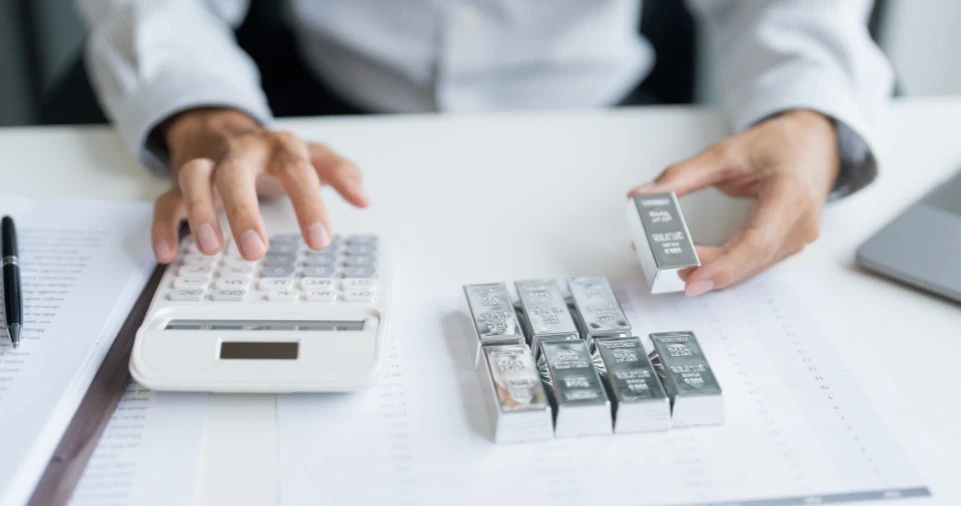
Silver prices hit $43.86 per ounce in late 2025—the highest level in over a decade. But if you’re searching “Silver Price FintechZoom,” you’re not just wondering about today’s price. You’re facing a real decision: Is silver a smart investment for your portfolio right now? And can FintechZoom help you make that decision wisely?
Here’s the truth most silver investment articles won’t tell you: FintechZoom is an excellent research tool, but it’s not actually a silver trading platform. You can’t buy silver on it. What it does offer—real-time price tracking, industrial demand analysis, and market forecasting tools—can help you become a smarter silver investor, whether you’re buying physical coins, ETFs, or mining stocks.
This guide will help you decide if silver investing makes sense for your situation, show you exactly how to use FintechZoom’s features effectively, and walk you through your first silver investment step-by-step—with real cost breakdowns, risk warnings, and strategies you can implement this week.
What is FintechZoom Silver Price Tracking? (And What It Isn’t)
Let’s clear up the biggest misconception first. When you search for FintechZoom silver price information, you’re looking at a financial data and analysis platform, not a broker or dealer where you can buy and sell silver.
Think of FintechZoom as your sophisticated market intelligence dashboard. It’s like having a Bloomberg terminal’s silver tracking capabilities without the $24,000 annual subscription. You get real-time price updates, historical charts spanning decades, technical analysis tools, and market commentary—all designed to help you make informed decisions.
FintechZoom Silver Price Platform Features
Here’s what FintechZoom actually provides for silver investors:
- Real-Time Price Data: Updates approximately every 10 seconds during active trading hours, pulling from global silver markets to give you the current spot price.
- Historical Charting: Access years of price history with customizable timeframes. You can zoom into daily movements or pull back to see 10-year trends.
- Technical Indicators: Moving averages, RSI (Relative Strength Index), MACD (Moving Average Convergence Divergence), and other tools that help identify potential entry and exit points.
- Market News Integration: Curated news feeds covering industrial demand shifts, mining production updates, and economic factors affecting silver prices.
- Mobile Accessibility: Track prices on your phone, which matters when silver can move 3-5% in a single day during volatile periods.
- Price Alerts: Set notifications when silver hits specific price points—crucial for dollar-cost averaging strategies or capturing dips.
What You Can’t Do on FintechZoom
Being honest about limitations builds trust, so let’s be clear: FintechZoom doesn’t execute trades. You won’t find a “Buy Now” button for physical silver, ETFs, or mining stocks. For actual purchases, you’ll need separate accounts with brokers (like Fidelity, Vanguard, or TD Ameritrade for ETFs) or precious metals dealers (like APMEX, JM Bullion, or SD Bullion for physical silver).
This isn’t a weakness—it’s actually a strength. FintechZoom focuses on providing unbiased market data rather than trying to sell you silver directly. Your research and your purchases stay separate, which keeps the analysis objective.
How FintechZoom Compares to Alternatives
| Platform | Real-Time Pricing | Historical Data | Technical Analysis | News Integration | Mobile App | Cost |
|---|---|---|---|---|---|---|
| FintechZoom | ✅ Every 10 sec | ✅ Extensive | ✅ Advanced tools | ✅ Curated feeds | ✅ Yes | Free |
| Kitco | ✅ Live | ✅ Good | ⚠️ Basic | ✅ Excellent | ✅ Yes | Free |
| Bloomberg | ✅ Instant | ✅ Comprehensive | ✅ Professional | ✅ Best-in-class | ✅ Yes | $24K/year |
| BullionVault | ✅ Live | ⚠️ Limited | ❌ Minimal | ⚠️ Basic | ✅ Yes | Free (dealer) |
Verdict: For most individual investors, FintechZoom offers the best balance of sophisticated analysis tools and accessibility. Kitco excels for precious metals news, Bloomberg is professional-grade (but expensive), and BullionVault is better as a dealer than an analysis platform.
Current Silver Market Analysis: Why Investors Are Paying Attention
Silver isn’t just riding gold’s coattails anymore. The metal has carved out its own compelling investment thesis, driven by forces that didn’t exist even five years ago.
The Price Situation Right Now
As of late 2025, silver trades around $42-44 per ounce, representing a remarkable 25-30% gain year-to-date and 37-39% increase from the previous year. To put this in perspective, silver last saw sustained prices above $40 during the 2020-2021 precious metals rally.
But here’s what makes this different: the current rally isn’t just speculative fever. It’s backed by fundamental supply-demand imbalances that could persist for years.
Industrial Demand: The Real Story Behind Silver Prices
Unlike gold, which derives 90% of its value from investment and jewelry demand, silver is genuinely consumed by industry. And consumption is accelerating.
In 2024, industrial applications consumed 680.5 million ounces—an all-time record and the fourth consecutive annual high. This represents 59% of total silver consumption, up from just 50% a decade ago. Let me break down where this demand comes from:
Solar Panel Manufacturing (The Big One)
Each solar panel contains approximately 20 grams of silver. That might not sound like much until you realize global solar installations hit 467 gigawatts in 2024—a 460% increase from 2015 levels.
Solar photovoltaic demand alone consumed 197-232 million ounces in 2024, accounting for 17-19% of total silver demand. And here’s the kicker: newer N-type solar panels (TOPCon technology) actually require 50% more silver than traditional panels, despite industry efforts to reduce silver content.
The International Energy Agency projects solar capacity could triple by 2030. Do the math—that’s enormous silver consumption baked into the energy transition.
Electric Vehicles and Technology
Each electric vehicle requires 25-50 grams of silver for battery systems, safety components, and electrical connections. With EV production growing 12-18% annually, automotive silver consumption reached 80-90 million ounces in 2024-2025.
Electronics continue as silver’s largest single industrial consumer—circuit boards, semiconductors, 5G infrastructure, and AI data centers all require silver’s unmatched electrical conductivity. Total electronics demand: 445 million ounces annually.
Medical and Healthcare Applications
Silver’s antimicrobial properties drive expanding healthcare uses: antimicrobial coatings, advanced wound dressings, water purification systems, and diagnostic equipment. This sector shows 25-30% annual growth—small in absolute terms but notable for consistency.
The Supply Squeeze Nobody’s Talking About
Here’s the uncomfortable truth about silver supply: the market has run deficits for four consecutive years (2021-2024), totaling 678 million ounces. That’s equivalent to 10 months of global mine production simply vanishing from inventories.
Why can’t supply keep up?
72% of silver comes as a byproduct of copper, lead, and zinc mining. Silver miners can’t just “turn up production” when prices rise—they’re dependent on base metal mining economics.
New silver mining projects require 5-8 years from discovery to production. Environmental permitting, infrastructure development, and capital requirements create long lead times.
Declining ore grades at existing mines mean companies dig deeper and process more rock for less silver output.
Global mine production projects only 2% growth in 2025 to approximately 835 million ounces—nowhere near enough to close the supply deficit as industrial demand continues surging.
Price Forecasts: What the Professionals See
Leading financial institutions provide cautiously optimistic targets for silver:
| Institution | 2025 Target | 2026 Target | Key Assumption |
|---|---|---|---|
| UBS | $38-40/oz | $35-37/oz | Strong industrial demand continues |
| Macquarie | $36/oz | $31-34/oz | Moderate supply increase expected |
| Scotia Bank | $31.86/oz | $31.00/oz | Balanced supply-demand dynamics |
| ING | $31.00/oz | $31.00/oz | Stable long-term outlook |
Reality check: These forecasts were made when silver traded at $24-28/oz. With prices already exceeding most 2025 targets, institutions are likely revising estimates upward. The University of New South Wales research warning that solar industry growth could exhaust 85-98% of global silver reserves by 2050 adds weight to long-term bullish scenarios.
Should you invest at $43/oz? That’s the decision framework we’re building toward.
Silver Investment Methods: Physical vs ETFs vs Mining Stocks
You can’t just “buy silver.” You need to choose how you want exposure to silver prices. Each method has different costs, benefits, and ideal use cases.
The Three Core Investment Approaches
Let me walk you through each option with brutal honesty about what works, what doesn’t, and what it actually costs.
Physical Silver: Coins, Bars, and Rounds
What it is: Buying actual silver you can hold—coins from government mints, private mint rounds, or investment-grade bars.
Popular options:
- American Silver Eagles: 1 oz coins from U.S. Mint, highly liquid, premiums run $4-6 over spot
- Canadian Maple Leafs: 1 oz coins, 99.99% pure, slightly lower premiums ($3-5)
- Silver bars: 1 oz to 1,000 oz sizes, lowest premiums on larger bars ($2-4 over spot for 100 oz)
- Silver rounds: Privately minted, diverse designs, competitive pricing ($2-3 over spot)
Real costs for $10,000 investment (at $43/oz spot):
- Silver content: $10,000 ÷ $43 = 232 oz at spot
- Premium (average 10%): +$1,000
- Shipping: $30-50
- Insurance (optional): $50-100/year
- Storage solution: $200-500 (safe) or $100-300/year (vault)
Total first-year cost: $11,280-11,950 for $10,000 of silver at spot value
Pros:
- ✅ Direct ownership—no counterparty risk
- ✅ Tangible asset during financial crises
- ✅ No ongoing management fees
- ✅ Privacy (cash purchases under $10K)
- ✅ Can hold long-term without selling
Cons:
- ❌ Storage and security concerns
- ❌ Lower liquidity than ETFs
- ❌ Premiums eat into returns (10-15% typical)
- ❌ Selling back often below spot price
- ❌ Authenticity verification needed
Best for: Investors who value tangible assets, want long-term holdings (5+ years), have secure storage, and prefer privacy over convenience.
Silver ETFs: Paper Silver with Easy Trading
What it is: Exchange-traded funds that hold physical silver in vaults and issue shares representing fractional ownership.
Top silver ETFs:
| ETF Name | Ticker | Assets Under Management | Expense Ratio | Liquidity |
|---|---|---|---|---|
| iShares Silver Trust | SLV | $12+ billion | 0.50% | Excellent |
| Aberdeen Standard Physical | SIVR | $1+ billion | 0.30% | Very good |
| ProShares Ultra Silver | AGQ | $500+ million | 0.95% | Good (2x leveraged) |
Real costs for $10,000 investment:
- Purchase price: $10,000 (no premium over spot NAV)
- Trading commission: $0 (most brokers)
- Expense ratio: $30-95/year (0.30-0.95%)
- No storage costs
- No insurance costs
Total first-year cost: $10,030-95 for $10,000 exposure
5-year total cost (expense ratios compounded):
- SLV (0.50%): $253
- SIVR (0.30%): $152
- AGQ (0.95%): $482
Pros:
- ✅ Instant liquidity—trade like stocks
- ✅ No storage concerns
- ✅ Precise position sizing
- ✅ Can trade in retirement accounts (IRA)
- ✅ Lower total costs than physical (for short-medium term)
- ✅ Transparent pricing (tracks spot closely)
Cons:
- ❌ Counterparty risk (trust the fund)
- ❌ Ongoing expense ratios
- ❌ No tangible ownership
- ❌ Can’t hold physical silver from ETF
- ❌ Tax treatment as collectible (28% vs 15-20% capital gains)
Best for: Investors prioritizing liquidity, trading actively, holding in tax-advantaged accounts, or wanting exposure without storage hassles.
Silver Mining Stocks: Leveraged Exposure
What it is: Shares in companies that mine silver. Stock prices often move 2-3x the percentage change in silver prices.
Types of mining stocks:
- Primary silver miners: Companies mainly mining silver (First Majestic Silver, Hecla Mining)
- Silver streaming companies: Finance miners in exchange for future silver at discount (Wheaton Precious Metals)
- Diversified miners: Mine multiple metals including silver (Pan American Silver)
Real costs for $10,000 investment:
- Purchase price: $10,000
- Trading commissions: $0 (most brokers)
- No ongoing fees (unless mutual fund)
- Dividend potential (some miners pay 1-3%)
Total cost: $10,000 (lowest transaction costs)
Pros:
- ✅ Amplified returns during silver bull markets
- ✅ Dividend income potential
- ✅ Stock market liquidity
- ✅ Standard capital gains tax treatment
- ✅ Can analyze fundamentals (management, reserves, costs)
Cons:
- ❌ Amplified losses during downturns
- ❌ Company-specific risks (management, accidents, political)
- ❌ Doesn’t track silver prices perfectly
- ❌ More volatile than physical or ETFs
- ❌ Requires company research skills
Best for: Experienced investors comfortable with higher volatility, seeking leveraged exposure to silver prices, willing to research individual companies.
Which Method Should You Choose?
The honest answer: it depends on your specific situation. Here’s a simple decision framework:
Choose Physical Silver if:
- You’re holding 5+ years
- You value tangible ownership
- You have secure storage
- You’re building a crisis hedge
- You prefer privacy
Choose Silver ETFs if:
- You might trade within 1-5 years
- You want easy liquidity
- You’re investing through an IRA
- You prefer simplicity
- Storage concerns you
Choose Mining Stocks if:
- You understand stock market risks
- You want leveraged exposure
- You’re comfortable with volatility
- You enjoy company research
- You want dividend potential
Or choose a combination: Many sophisticated investors split allocations—50% ETFs for liquidity, 30% physical for crisis protection, 20% mining stocks for upside leverage.
Decision Framework: Is Silver Right for Your Portfolio?
Before learning “how” to invest in silver, you need to answer “should” you invest in silver. Let’s work through this systematically.
The Basic Qualifying Questions
Question 1: Do you have an emergency fund?
If you don’t have 3-6 months of expenses in easily accessible cash or cash equivalents, stop here. Build that first. Silver is not a substitute for emergency liquidity.
Question 2: Are you comfortable with 20-30% price swings?
Silver can drop 25% in a matter of weeks during market panics (March 2020, November 2008). It can also surge 40% in months during rallies (2020-2021). This volatility is normal. If it would cause you to panic sell, silver investing isn’t for you.
Question 3: What’s your investment timeline?
- Less than 3 years: Silver probably isn’t ideal (too volatile for short-term)
- 3-7 years: Silver makes sense as portfolio diversification
- 7+ years: Silver can play multiple roles (hedge, growth, crisis protection)
Question 4: What problem are you trying to solve?
✅ Good reasons to invest in silver:
- Portfolio diversification beyond stocks and bonds
- Inflation hedge as purchasing power erodes
- Industrial demand growth exposure (tech, solar, EVs)
- Crisis hedge for geopolitical or financial instability
- Tactical play on supply-demand fundamentals
❌ Bad reasons to invest in silver:
- “Get rich quick” speculation
- Following social media hype without research
- Believing silver “can’t go down”
- Replacing diversified stock portfolio
- Timing the market perfectly (nobody can)
Portfolio Allocation Guidelines
Financial advisors typically recommend the following precious metals allocations:
Conservative investors (low risk tolerance, near retirement):
- 5-10% precious metals (silver + gold combined)
- Favor stability over growth
- Focus on ETFs for liquidity
Moderate investors (balanced approach, 10+ years to retirement):
- 10-15% precious metals
- Can handle volatility
- Mix of ETFs and physical silver
Aggressive investors (high risk tolerance, long timeline):
- 15-20% maximum precious metals
- Seeking growth and leverage
- May include mining stocks
Critical rule: Never allocate so much to silver that a 50% price drop would financially devastate you. This is speculative allocation, not your retirement core.
Budget-Based Reality Check
Let’s be practical about what different investment levels actually look like:
$1,000 investment:
- Physical: ~23 oz silver coins (accounting for premiums)
- ETF: 23 shares SLV (fractional exposure to ~23 oz)
- Mining stock: ~$1,000 position in 1-2 companies
- Recommendation: Start with ETF for simplicity and learning
$5,000 investment:
- Physical: ~110 oz mixed coins/bars
- ETF: 116 shares SLV
- Mining stocks: Diversify across 3-5 companies
- Recommendation: 60% ETF, 40% physical OR 70% ETF, 30% mining stocks
$10,000 investment:
- Physical: ~215 oz with volume discounts
- ETF: 232 shares SLV
- Mining stocks: Diversified portfolio
- Recommendation: 50% ETF, 30% physical, 20% mining stocks OR 70% ETF, 30% physical
$25,000+ investment:
- Full diversification across all methods
- Consider: Tax implications, estate planning, vault storage
- Recommendation: Consult fee-only financial advisor for personalized strategy
When NOT to Invest in Silver
Being honest about this is crucial. You should avoid or delay silver investing if:
❌ You’re in credit card debt (pay that off first—interest rates destroy any investment returns)
❌ You lack emergency savings (liquidity comes first)
❌ You’re investing money you’ll need within 12 months (silver isn’t a savings account)
❌ You can’t emotionally handle watching your investment drop 30% temporarily
❌ You’re chasing performance after a big run-up (FOMO is a terrible investment strategy)
❌ You haven’t done basic research on silver fundamentals
❌ You’re looking for guaranteed returns (nothing is guaranteed in investing)
Step-by-Step: Your First Silver Investment
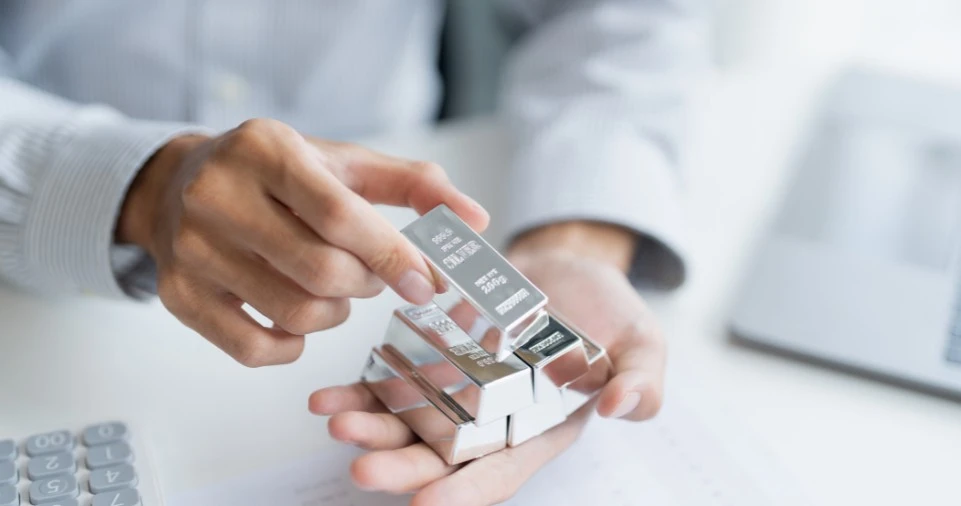
Alright, you’ve decided silver makes sense for your portfolio. Now what? Let me walk you through the actual implementation—not theory, but practical steps you can take this week.
Week 1: Research and Preparation
Day 1-2: Set up your FintechZoom tracking
- Visit FintechZoom’s website and navigate to the metals/commodities section
- Bookmark the silver price page
- Create a free account (if offered) to enable price alerts
- Set your first alert: notify you when silver hits $40 or $45 (above and below current price)
- Spend 15 minutes exploring the historical charts—look at 1-year, 5-year, and 10-year views
This familiarizes you with silver’s typical price movements and volatility.
Day 3-4: Choose your investment method
Based on the decision framework above, select your approach:
- Physical silver: Continue to Day 5
- Silver ETF: Skip to Day 6
- Mining stocks: Skip to Day 7
Day 5: Research physical silver dealers (if buying physical)
Vetted, reputable dealers for U.S. investors:
- APMEX (apmex.com): Largest selection, competitive pricing, excellent customer service
- JM Bullion (jmbullion.com): Low premiums, fast shipping, good for bulk orders
- SD Bullion (sdbullion.com): Often lowest premiums, basic selection
- Money Metals Exchange (moneymetals.com): Solid reputation, educational content
What to check:
- Better Business Bureau rating (A+ preferred)
- Reviews on independent sites (TrustPilot, Google)
- Buyback policy (can you sell back if needed?)
- Shipping costs and insurance
- Minimum order requirements
Day 6: Open brokerage account (if buying ETFs)
If you don’t already have one:
- Fidelity: No commissions, excellent research tools, user-friendly
- Charles Schwab: Great customer service, robust platform
- Vanguard: Low-cost focus, simple interface
- TD Ameritrade: Advanced tools, good for active traders
Most accounts open in 15-20 minutes online. Fund via bank transfer (takes 1-3 business days).
Day 7: Research mining companies (if buying stocks)
Start with established miners:
- Pan American Silver (PAAS): Diversified, strong balance sheet
- First Majestic Silver (AG): Pure silver play, volatile but growth-focused
- Wheaton Precious Metals (WPM): Streaming model, lower risk than miners
- Hecla Mining (HL): Oldest U.S. silver miner, consistent producer
Read latest quarterly reports, check production costs, review management track record.
Week 2: Make Your First Purchase
For Physical Silver:
- Start small: Order $500-1,000 for your first purchase (learn before committing big)
- Select products: American Silver Eagles (highly liquid) or 10 oz bars (better premiums)
- Place order online: Use credit card for purchase protection or bank wire for large orders
- Track shipment: Insured shipping typically takes 5-10 business days
- Plan storage: Home safe ($200-500), bank safety deposit box ($50-200/year), or vault storage ($100-300/year)
For Silver ETFs:
- Log into brokerage account
- Search ticker: SLV (iShares) or SIVR (Aberdeen)
- Review current price: Check it against FintechZoom spot price (should be within 1-2%)
- Place order: Market order during trading hours or limit order for price control
- Start with 25-50% of planned allocation: Learn how the ETF trades before full commitment
For Mining Stocks:
- Start with diversification: Buy 3-5 different companies minimum
- Equal weight initially: $200-300 per company if investing $1,000 total
- Use limit orders: Mining stocks can be volatile—set your maximum price
- Track performance separately: Mining stocks won’t move perfectly with silver prices
Week 3-4: Monitoring and Learning
Set up your routine (15 minutes daily or 30 minutes weekly):
- Check FintechZoom silver price: Morning glance at overnight movement
- Review your positions: How did your investment perform vs spot silver?
- Read news: What’s driving today’s price movement?
- Learn technical patterns: Familiarize yourself with support/resistance levels
- Journal observations: Track what you notice about silver price patterns
Dollar-Cost Averaging Setup:
If you’re investing $10,000 total, don’t invest it all at once. Spread purchases:
- Option 1: $2,000/month for 5 months
- Option 2: $1,000 every two weeks for 10 purchases
- Option 3: $500/week for 20 weeks
This reduces the risk of buying everything at a temporary peak.
Month 2 and Beyond: Building Your Position
Quarterly review checklist:
✅ How has silver performed vs your expectations?
✅ Has your portfolio allocation drifted (silver up/down relative to other assets)?
✅ Should you rebalance to maintain target allocation?
✅ Any major news affecting silver fundamentals (new solar capacity, mining disruptions)?
✅ Are you still comfortable with your risk exposure?
Rebalancing example:
Let’s say you started with a 10% silver allocation in a $100,000 portfolio ($10,000 in silver). Six months later, silver has surged and your portfolio is now:
- Silver value: $13,000 (up 30%)
- Total portfolio: $106,000
- Silver allocation: 12.3%
If you want to maintain 10%, you could:
- Sell $2,500 of silver
- Add $7,000 to other investments
- Do nothing if you’re comfortable with higher allocation
Total Cost Analysis: What Silver Really Costs You
Let’s cut through marketing hype and show you exactly what different silver investments cost over time. These numbers assume silver prices remain flat (conservative assumption).
Physical Silver: 5-Year Total Cost of Ownership
Initial $10,000 investment at $43/oz spot price:
| Cost Component | Year 1 | Years 2-5 (annual) | 5-Year Total |
|---|---|---|---|
| Premium over spot (10%) | $1,000 | – | $1,000 |
| Shipping/insurance | $50 | – | $50 |
| Storage (home safe) | $300 | – | $300 |
| OR Vault storage | $150 | $150 | $750 |
| Opportunity cost (selling below spot) | – | – | $300 (estimate) |
| Total with home storage | $1,350 | – | $1,650 |
| Total with vault storage | $1,200 | $150 | $2,100 |
Effective cost: 16.5-21% of initial investment over 5 years (if silver prices stay flat).
For silver to break even, it needs to appreciate 16.5-21% just to cover costs.
Silver ETF: 5-Year Total Cost of Ownership
Initial $10,000 investment in SLV (0.50% expense ratio):
| Cost Component | Year 1 | Years 2-5 (annual) | 5-Year Total |
|---|---|---|---|
| Purchase commission | $0 | – | $0 |
| Expense ratio (0.50%) | $50 | $50 | $253 (compounded) |
| Bid-ask spread (0.05%) | $5 | – | $5 |
| Total cost | $55 | $50 | $253 |
Effective cost: 2.53% of initial investment over 5 years.
For silver to break even, it needs to appreciate just 2.53%—significantly lower than physical.
Mining Stocks: 5-Year Total Cost
Initial $10,000 investment across 5 companies:
| Cost Component | Year 1 | Years 2-5 (annual) | 5-Year Total |
|---|---|---|---|
| Trading commissions | $0 | $0 | $0 |
| Bid-ask spreads | $20 | – | $20 |
| Tax on dividends (if 2% yield) | $40 | $40 | $200 |
| Total cost | $60 | $40 | $220 |
But consider: Mining stocks might underperform silver by 10-20% OR outperform by 50-100%. Costs are low, but performance variance is high.
The Surprising Truth About Costs
For holding periods under 5 years: ETFs are usually cheaper than physical silver when you factor in premiums, storage, and buyback spreads.
For holding periods over 10 years: Physical silver can be cheaper if you have free storage (good home safe) and don’t need to sell frequently.
For maximum upside: Mining stocks have lowest transaction costs but highest volatility. They’re not pure silver exposure.
Real-world scenario:
You invest $10,000 in silver via SLV. Over 5 years, silver appreciates 30% (roughly 5.4% annually).
- Silver value increases: $10,000 → $13,000
- Total costs (ETF fees): -$253
- Net profit: $2,747 (27.47% return)
Same scenario with physical silver:
- Silver value increases: $10,000 → $13,000
- Initial premium paid: -$1,000 (sunk cost)
- Storage costs: -$750
- Selling back (2% below spot): -$260
- Net profit: $990 (9.9% return)
The ETF delivered nearly 3x the return in this scenario due to lower costs.
Risk Management & Common Mistakes to Avoid
Silver investing isn’t risk-free. Let me walk you through what can go wrong and how to protect yourself.
Understanding Silver’s Volatility
Silver’s price can swing 20-30% in a matter of months. In March 2020, silver crashed from $18 to $12 (33% drop) in three weeks, then surged to $29 by August (141% gain). This is normal silver behavior.
Your risk management plan should include:
Position sizing: Never allocate so much to silver that a 50% drop would devastate you financially. If you’re losing sleep over price movements, you’re overexposed.
Stop-loss discipline: For trading positions (not long-term holds), consider selling if silver drops 15-20% from your purchase price. This limits damage during sustained downturns.
Rebalancing triggers: If silver surges and becomes 20%+ of your portfolio (when you targeted 10%), take profits and rebalance. Protecting gains matters as much as avoiding losses.
Storage and Security for Physical Silver
Home storage risks:
- Theft during break-ins (homeowner’s insurance often caps precious metals coverage at $1,000-2,500)
- Fire damage
- Family members not knowing where it’s stored
- Accidentally throwing away during moves
Solutions:
- Quality safe: $500-1,500, bolted to floor, fireproof
- Separate precious metals rider on homeowner’s insurance: $100-300/year for $10,000-25,000 coverage
- Tell one trusted person where silver is stored (emergency access)
- Photograph holdings for insurance documentation
Vault storage:
- Professional facilities: $100-300/year for $10,000-50,000 storage
- Fully insured by facility
- Segregated storage (your specific bars/coins) vs allocated (you own X ounces from pooled inventory)
- Consider proximity—can you access if needed?
Scam Warnings and Red Flags
The precious metals industry attracts scammers. Watch for these warning signs:
❌ “Rare silver coins” with massive premiums: You’re investing in silver, not rare collectibles. Stick to bullion unless you’re an expert numismatist.
❌ “Free silver” promotions: Nothing is free. These schemes lock you into expensive subscription programs or overpriced future purchases.
❌ Unsolicited phone calls: Legitimate dealers don’t cold-call selling silver. Hang up immediately.
❌ Pressure tactics: “Buy now before prices skyrocket!” Reputable dealers don’t use high-pressure sales.
❌ Offshore storage you can’t verify: If you can’t physically audit your silver or it’s stored in questionable jurisdictions, walk away.
❌ Prices far below spot: If it seems too good to be true, it is. You’re likely buying fake silver.
Authenticity verification for physical silver:
- Buy only from established dealers (APMEX, JM Bullion, SD Bullion)
- Test with magnet (silver isn’t magnetic)
- Check dimensions and weight against published specs
- For large purchases, use XRF analyzer or professional assay
- Government mint coins (Eagles, Maples) have security features
Tax Implications: The Basics
Disclaimer: I’m not a tax professional. Consult a CPA for your specific situation.
Physical silver (U.S.):
- Considered “collectible” by IRS
- Long-term capital gains (held >1 year): 28% maximum rate (higher than stocks)
- Short-term gains (held <1 year): Taxed as ordinary income
- Reporting required for sales over $10,000 cash
- Form 1099-B may be issued by dealers for sales over threshold amounts
Silver ETFs (U.S.):
- Most structured as grantor trusts
- Also taxed as collectibles: 28% maximum long-term rate
- Reported on Form 1099-B from broker
Mining stocks (U.S.):
- Treated as regular equities
- Long-term capital gains: 0%, 15%, or 20% (based on income)
- Short-term gains: Ordinary income rates
- Dividends: Qualified dividend rates (typically 15-20%)
IRA considerations: You CAN hold silver ETFs and mining stocks in IRAs. Physical silver requires a self-directed IRA with approved custodian—more complex and expensive.
Common Beginner Mistakes
Mistake 1: Buying everything at once
You invest $10,000 into silver at $43/oz. Next month, silver drops to $37. You’re immediately down 14% and feeling panicked.
Solution: Dollar-cost average over 3-6 months.
Mistake 2: Panic selling during dips
Silver drops 20% and you sell, locking in losses. Then it recovers and surges. You missed the rebound.
Solution: Only invest money you won’t need for 3+ years. Have an exit plan before buying, not during panic.
Mistake 3: Ignoring portfolio allocation
Silver surges and becomes 30% of your portfolio. You’re now overexposed to one volatile asset.
Solution: Set rebalancing triggers (e.g., if silver exceeds 15%, sell some).
Mistake 4: Paying huge premiums for collectible coins
You buy “rare silver coins” at 50% premiums over spot, thinking they’ll appreciate. They don’t—you overpaid for numismatic value you don’t understand.
Solution: Stick to bullion products (Eagles, Maples, bars) with low premiums.
Mistake 5: Not having an exit strategy
You bought silver but have no plan for when or why you’d sell. Years pass. You never take profits or cut losses.
Solution: Define your targets before buying. “I’ll sell 50% if silver hits $60” or “I’ll exit if it drops below $35.”
Using FintechZoom for Ongoing Monitoring
You’ve made your investment. Now let’s use FintechZoom effectively to manage it.
Setting Up Your Dashboard
Price alerts (set these immediately):
- Downside protection: Alert at 10% below your purchase price (consider your risk tolerance)
- Upside targets: Alert at 20%, 30%, 50% above purchase price (profit-taking levels)
- Technical levels: Set alerts at key resistance ($45, $50) and support ($40, $38) levels
Daily monitoring routine (5-10 minutes):
- Check overnight Asian and European price movements
- Scan headlines for market-moving news
- Review your position’s performance vs spot price
- Update your investment journal with observations
Reading Silver Charts on FintechZoom
Key technical indicators to watch:
Moving Averages: The 50-day and 200-day moving averages show trend direction. When the 50-day crosses above the 200-day (“golden cross”), it’s historically bullish. Crossing below (“death cross”) is bearish.
RSI (Relative Strength Index): Readings above 70 suggest silver is “overbought” (possible pullback coming). Below 30 suggests “oversold” (possible bounce).
Support and Resistance: Price levels where silver historically bounces (support) or struggles to break through (resistance). Currently, watch $40 support and $45 resistance.
Volume: Higher trading volume during price increases confirms trend strength. Low volume rallies often fail.
When to Check Prices (Honestly)
Daily checking is fine if you’re learning and it doesn’t stress you. But be honest: obsessive monitoring usually leads to poor decisions.
Recommended approach:
- Active traders: Daily morning check before market open
- Long-term investors: Weekly review on Sundays
- Very long-term holders: Monthly check during first year, quarterly thereafter
Trust your plan: If you’ve set price alerts, FintechZoom will notify you when important levels hit. You don’t need to watch every $0.10 move.
Integrating with Your Overall Portfolio
FintechZoom shows you silver prices, but your silver investment exists within a broader portfolio. Monthly, review:
Correlation check: How is silver moving relative to your stocks and bonds? During market stress, silver should diversify (move independently or inversely).
Allocation drift: Recalculate your silver percentage of total portfolio. Rebalance if it’s exceeded your targets by 5+ percentage points.
Performance attribution: Is silver helping or hurting overall portfolio returns? Over 3-5 years, it should reduce volatility even if returns are mixed.
What Could Go Wrong: Scenario Planning
Let’s address the “what if” scenarios that keep investors up at night.
Scenario 1: Silver Crashes 40% to $26/oz
What could cause this:
- Global recession crushes industrial demand
- Major new silver discovery increases supply
- Technology breakthrough replaces silver in solar panels
- Massive investor liquidation during financial crisis
Your response plan:
- Don’t panic sell: Review why you invested. Has the long-term thesis changed?
- Check fundamentals: Is industrial demand actually collapsing, or is this fear-driven?
- Consider averaging down: If thesis intact, buying at $26 lowers your average cost
- Portfolio check: Has this crash made silver too small relative to your target? Might rebalance into it.
- Stop-loss triggers: Only sell if you predetermined this as your exit point
Historical context: Silver has dropped 40%+ multiple times (2011-2013, 2020 crash) and recovered. But recovery isn’t guaranteed.
Scenario 2: Silver Explodes to $70/oz
What could cause this:
- Solar installations triple forecasts
- Major supply disruption (mine closures, geopolitical)
- Currency crisis drives safe-haven demand
- Retail investor mania (another WallStreetBets moment)
Your response plan:
- Take partial profits: Sell 25-50% to lock in gains
- Rebalance: Silver is likely now oversized in your portfolio
- Avoid FOMO: Don’t add more at peak prices
- Set trailing stop: Protect gains by selling if it drops 15% from highs
- Enjoy the win: You invested wisely. Celebrate, then stick to your plan.
Historical context: Silver hit $49 in 2011, then crashed 65% over the next two years. Profit-taking matters.
Scenario 3: The Dealer You Used Goes Bankrupt
If you bought physical silver:
- Good news: You own the silver. It’s in your possession or segregated vault storage. The dealer’s bankruptcy doesn’t affect your ownership.
- Bad news: If you stored with them in non-segregated (“allocated”) storage, you’re an unsecured creditor. You might lose some or all.
Protection: Use segregated storage or take physical possession.
If you bought through an ETF:
- ETF bankruptcy: The silver in the trust belongs to shareholders, not the fund company. You’d receive your proportional share.
- Broker bankruptcy: Your shares are held in street name but protected by SIPC insurance up to $500,000.
Protection: Choose established ETFs with transparent auditing (SLV, SIVR) and reputable brokers.
Scenario 4: Technology Replaces Silver in Key Applications
This is the long-term existential risk. What if solar panels stop using silver? What if cheaper substitutes emerge?
Reality check:
- Industry has tried to reduce silver content for decades. Progress is slow.
- Even if solar uses 50% less silver per panel, doubling panel production keeps demand flat.
- Silver’s unique properties (conductivity, reflectivity, antimicrobial) make substitution difficult across all applications.
Hedge: Don’t allocate 50% of your portfolio to silver. The 10-15% recommendation provides exposure while limiting this risk.
Frequently Asked Questions
Is FintechZoom free for silver price tracking?
Yes, FintechZoom’s basic silver price tracking, historical charts, and market news are free to access. Some advanced features or premium analysis tools might require a subscription, but for most individual investors tracking silver prices, the free version provides everything you need.
Can I actually buy silver on FintechZoom?
No, FintechZoom is a market data and analysis platform, not a broker or precious metals dealer. You’ll use FintechZoom to research and track silver prices, but you’ll need separate accounts with brokers (for ETFs/stocks) or dealers (for physical silver) to execute actual purchases.
How often does FintechZoom update silver prices?
FintechZoom updates silver prices approximately every 10 seconds during active trading hours, pulling from global silver markets. This real-time data helps you make informed decisions, though for long-term investors, minute-by-minute updates are less critical than weekly trends.
What’s a realistic return on silver over 5 years?
Historical average returns on silver vary widely—anywhere from 0% to 15% annually depending on the timeframe. The last 50 years show approximately 8% annualized returns, but with significant volatility. Over any 5-year period, you might see anywhere from -20% to +100% total returns. Silver is not a predictable growth investment.
Should I invest in silver or gold?
This depends on your goals. Gold offers more price stability and is primarily an investment/store of value asset. Silver has higher volatility, lower entry costs, and benefits from both investment demand AND industrial consumption. Many investors hold both—typically 70-80% gold, 20-30% silver in their precious metals allocation.
How do I know if the silver I’m buying is real?
Buy only from established, reputable dealers (APMEX, JM Bullion, SD Bullion). Government mint coins (American Eagles, Canadian Maple Leafs) have security features and authenticity guarantees. For bars and rounds, test with a magnet (silver isn’t magnetic), verify weight and dimensions match published specs, and for large purchases, consider professional assaying or XRF analysis.
What’s the minimum amount needed to start investing in silver?
With silver ETFs, you can start with as little as $43 (price of one share representing ~1 oz of silver). For physical silver, most dealers have minimum orders of $100-500, though you can buy a single 1-oz coin for around $45-50 including premiums. Start with what you’re comfortable risking while learning.
How is silver taxed when I sell?
In the U.S., physical silver and most silver ETFs are taxed as collectibles, with a maximum 28% long-term capital gains rate (for holdings over 1 year). Short-term gains are taxed as ordinary income. Mining stocks receive standard equity tax treatment (0-20% long-term capital gains). Consult a tax professional for your specific situation.
Can I hold silver in my IRA or 401(k)?
You can hold silver ETFs and mining stocks in traditional IRA or 401(k) accounts through standard brokers. Physical silver requires a self-directed IRA with an approved custodian, which involves additional fees and complexity. Most investors find silver ETFs in IRAs simpler and more cost-effective.
When is the best time to buy silver?
There’s no perfect timing. Dollar-cost averaging (buying regularly regardless of price) reduces timing risk. Historically, silver tends to perform well during periods of high inflation, economic uncertainty, and industrial demand growth. It underperforms during deflationary periods and economic stability. Focus on your long-term allocation rather than trying to time the market.
How much silver should I own relative to my total portfolio?
Financial advisors typically recommend 5-15% total precious metals allocation (silver plus gold combined). Within that, you might split 70% gold / 30% silver, or adjust based on your preferences. Never allocate so much that a 50% price drop would financially devastate you.
Where should I store physical silver?
Options include: (1) Home safe ($500-1,500 one-time cost, plus insurance rider), (2) Bank safety deposit box ($50-200/year, limited insurance), or (3) Professional vault storage ($100-300/year for $10-50K holdings, fully insured). Choose based on your investment size, accessibility needs, and risk tolerance.
Is silver a good investment during inflation?
Historically, yes. Silver has served as an inflation hedge, preserving purchasing power as currency values decline. During the 1970s inflation, silver surged from $1.30 to $50/oz. However, it doesn’t always keep pace with inflation year-to-year—it’s a long-term inflation hedge, not a perfect correlation.
What happens if industrial demand for silver decreases?
This is a long-term risk, particularly if technology finds cheaper substitutes for solar panels or electronics. However, silver’s unique properties (best electrical conductor, thermal conductor, reflectivity, antimicrobial) make complete substitution difficult. Diversification across multiple industries (solar, electronics, medical, automotive) also provides some protection.
How does the gold-silver ratio affect my investment?
The gold-silver ratio (currently around 85:1) shows how many ounces of silver equal one ounce of gold. Historical average is 70:1. When the ratio is high (>80), silver is relatively cheap compared to gold, potentially offering better value. When low (<60), silver is relatively expensive. Some investors use this to switch between metals.
Conclusion
Silver Price FintechZoom tracking is just the beginning. The platform gives you the data and tools—but you need to make informed decisions based on your unique financial situation, risk tolerance, and investment goals.
I’ve tried to give you complete transparency about what works, what doesn’t, and what it really costs. No hype. No fear-mongering. Just practical guidance from someone who’s seen investors make both brilliant decisions and costly mistakes.
Silver investing isn’t complicated, but it requires discipline, patience, and realistic expectations. Start small, learn as you go, and never invest more than you can afford to lose.
The opportunity is real. The risks are real. Your decision should be informed by both.
Now go take that first step.
Note: This article provides educational information and should not be considered financial advice. Precious metals investing carries risks including price volatility, storage concerns, and potential losses. Conduct your own research and consult with qualified financial advisors before making investment decisions. Silver prices and market conditions change frequently—verify current data before investing.